
Anyone who has ever heard me speak knows I typically end with this timeless quote from Aristotle: “We are what we repeatedly do. Excellence, then, is not an act, but a habit.
Last week, I had the pleasure of conducting a private dining etiquette tutorial for first, a young woman, who then told her parents about the experience, who then engaged my services for them because they are now retired who enjoys traveling the world, and then their younger son.
For Mom and Dad, despite being highly educated and accomplished, they recognized they lacked confidence in certain dining and social situations. Their eagerness to learn proper table manners and polished social behavior was inspiring, especially at a stage in life when many people believe they are finished learning.
What touched me most was their understanding about having to practice their newly acquired skills until they became habits. Their words warmed my heart and reminded me why I chose this profession: to educate and empower people of all ages to become their best selves through having great habits.
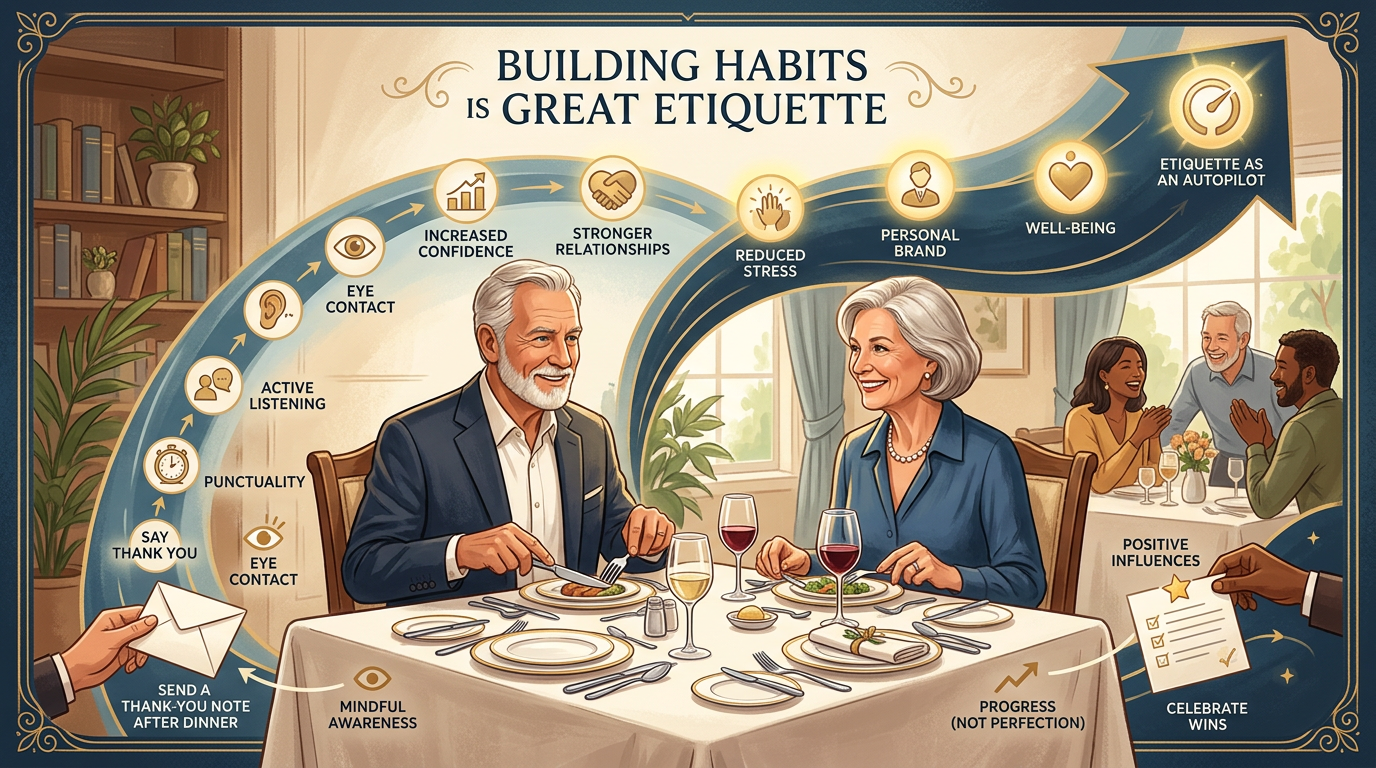
The truth is, etiquette is not a collection of rules to be obeyed. It is a collection of habits—small, repeated actions that become part of who we are and shape our image, presence, and personal brand.
What we do today determines what we will do tomorrow
Amanda Rebar, Director of Motivation at the Arnold School of Public Health, notes that “Many psychology models portray people as rational decision makers who carefully deliberate over the pros and cons of their options prior to choosing how to act. However, previous research has shown that one of the most reliable predictors of future behavior is past behavior.”
Researchers have found that much of daily life operates on autopilot. Studies show that 40% to 66% of our daily actions are driven by habit rather than conscious choice, with some research indicating that up to 88% of our actions occur automatically.
Think about that. If habits govern much of life, then the quality of our habits largely determines the quality of our lives.
When courtesy, respect, kindness, gratitude, punctuality, consideration, and civility become automatic responses, they influence every area of life with positivity. They strengthen relationships, reduce stress, improve communication, and create environments where people feel valued, respected, and truly seen.
Most importantly, etiquette is not about perfection. It is about developing positive habits that support our emotional, mental, spiritual, and physical well-being.
[What a coincidence: As a subscriber to Brendon Burchard’s https://GrowthDay.com program, see whata just came out, just as I am finalizing this month’s article: That Habit You Can’t Seem to Break?? Here’s Why…. Also at: https://www.growthday.com/e/BAh7BjoWZW1haWxfZGVsaXZlcnlfaWRsKwiCxPNQCgA%3D–a6112bf2ebbf1c6060e6e4d85a93ac9f47181ea1?skip_click_tracking=true]
How habits, well-being and etiquette are connected
Emotionally, etiquette helps us build healthier relationships. People who consistently practice kindness, active listening, gratitude, and consideration tend to enjoy stronger personal and professional connections. Positive relationships remain one of the greatest contributors to happiness and life satisfaction.
Mentally, etiquette reduces decision fatigue. When respectful behavior becomes second nature, we spend less energy wondering how to respond in social situations. We become more confident, less anxious, and better equipped to navigate challenges.
Spiritually, etiquette encourages mindfulness and gratitude. Simple acts of appreciation, respect, and consideration help us focus on something larger than ourselves. These behaviors cultivate humility, compassion, and a deeper sense of purpose.
Physically, positive habits influence other healthy behaviors. Research from Harvard shows that maintaining healthy habits can significantly increase life expectancy and reduce the risk of premature death. Similarly, the reduced stress, stronger relationships, and social support systems associated with respectful behavior contribute to overall wellness. Best of all, you can change your habits at any age. Here’s how to do so.
Eight Ways to Build Better Etiquette Habits:
1. Start small and be specific. Trying to change everything at once often leads to frustration. Instead, focus on one etiquette habit at a time. Make eye contact, arrive five minutes early, write thank-you notes, or put your phone away during meals. Small, consistent changes produce remarkable results.
2. Connect new habits to existing routines. One of the easiest ways to create a new habit is to attach it to something you already do. After every meeting, thank those who contributed. After dinner, send a brief note of appreciation to someone who helped you that day. Linking new behaviors to existing routines helps them stick.
3. Practice mindful awareness. Before changing a habit, you must first notice it. Pay attention to the moments when you interrupt, react impatiently, arrive late, or get distracted. Awareness creates the opportunity for improvement.
4. Focus on progress, not perfection. Everyone messes up occasionally. The goal is not flawless behavior but consistent improvement. When mistakes happen, acknowledge them, correct them as appropriate, and move forward.
There is no such thing as perfection, but you can practice the right behavior until it becomes natural.
5. Surround yourself with positive influences. Habits are contagious. Seek out friends, family members, mentors, and colleagues who demonstrate respect, professionalism, kindness, and integrity. Their example will reinforce your own commitment to positive behavior.
6. Celebrate small wins. Progress deserves recognition. When you successfully practice a new habit, acknowledge the achievement. Small victories build momentum and encourage continued growth.
7. Remember your “why.” The strongest habits are connected to purpose. Don’t practice etiquette simply because it is expected. Practice it because it builds trust, strengthens relationships, enhances confidence, reduces conflict, and contributes to a more respectful world.
8. Respect the lasting power of good habits. The quality of your life is built through repetition. Every day, you reinforce either positive or negative habits.
Each time you choose patience over irritation, gratitude over entitlement, listening over interrupting, or kindness over indifference, you strengthen behaviors that eventually become second nature.
When civility, etiquette, manners, respect, and consideration become automatic, you free yourself to focus on what truly matters: enjoying life, building meaningful relationships, contributing to your communities, and appreciating the beauty that surrounds you.
Over time, your habits become our character, and your character becomes your destiny.
Happy Practicing!